


In the firearms industry, I would argue most marketing sounds and looks the same — lists of specs, features, and technical jargon. Match-grade barrels. Modular chassis. Skeletonized triggers. It’s familiar, safe, and predictable. But here’s the basis of this post: specs sell attention, not loyalty.
Contents
Forbes argues that today’s buyers are purpose-driven and expect brands to align with their identity and values—not just deliver engineering.
Today’s buyer isn’t just looking for a tool. They’re looking for meaning. They want confidence, safety, status, empowerment, and belonging. When brands focus solely on engineering, they miss the deeper reason people buy — identity.
If you’re a relatively new firearm manufacturer aiming to gain visibility, this article offers insights on how to clarify your message and incorporate storytelling so your brand can stand out amidst the noise and clutter.
1. The Engineering Bias
Many firearm companies were established by individuals with backgrounds in engineering, machining, metal fabrication, gunsmithing, or who are former military personnel, competition shooters, and law enforcement officers. Notable names include Marty Daniel, Bill Wilson, Ed Brown, Les Baer, Gaston Glock, Edmund Heckler, Theodor Koch, and Alex Seid, among others. Their backgrounds shape how their brands communicate—often emphasizing specs and features rather than the emotional appeal or brand identity of their products. When I talk with prospective clients looking to start a firearm company, I often hear them say, “Marketing isn’t my thing.”
But consumers buy differently. They’re not buying a striker-fired system utilizing a flat-faced, polymer-injected trigger with a 90-degree break, achieving a consistent 4.5 ≠0.2 pound pull weight, utilizing optimized spring geometry and precise sear engagement surfaces for minimal pre-travel and over-travel.
They’re buying confidence, craftsmanship, entrance into a tribe (“I shoot Glock”), and assurance that their firearm will perform when it counts.
Specs grab attention. Stories build loyalty.
Watch the Daniel Defense Factory Tour Video below. The most interesting part is the story of how Marty Daniel had to bet the family farm.
2. Cultural Caution
Because firearms are the epitome of a politically charged product, brands often avoid emotional storytelling out of fear of backlash. So they default to mechanical descriptions that feel “safe.” But that safety creates sameness — and sameness clouds differentiation.
Storytelling doesn’t have to be controversial. The key is facts and nuance:
- Don’t play up fear.
- Focus on empowerment, defense, and utility.
- Display experience (competition, community, recreation, family, fun etc.)
Highlight confidence, patriotism, craftsmanship, and self-reliance. Those emotions connect without crossing lines.
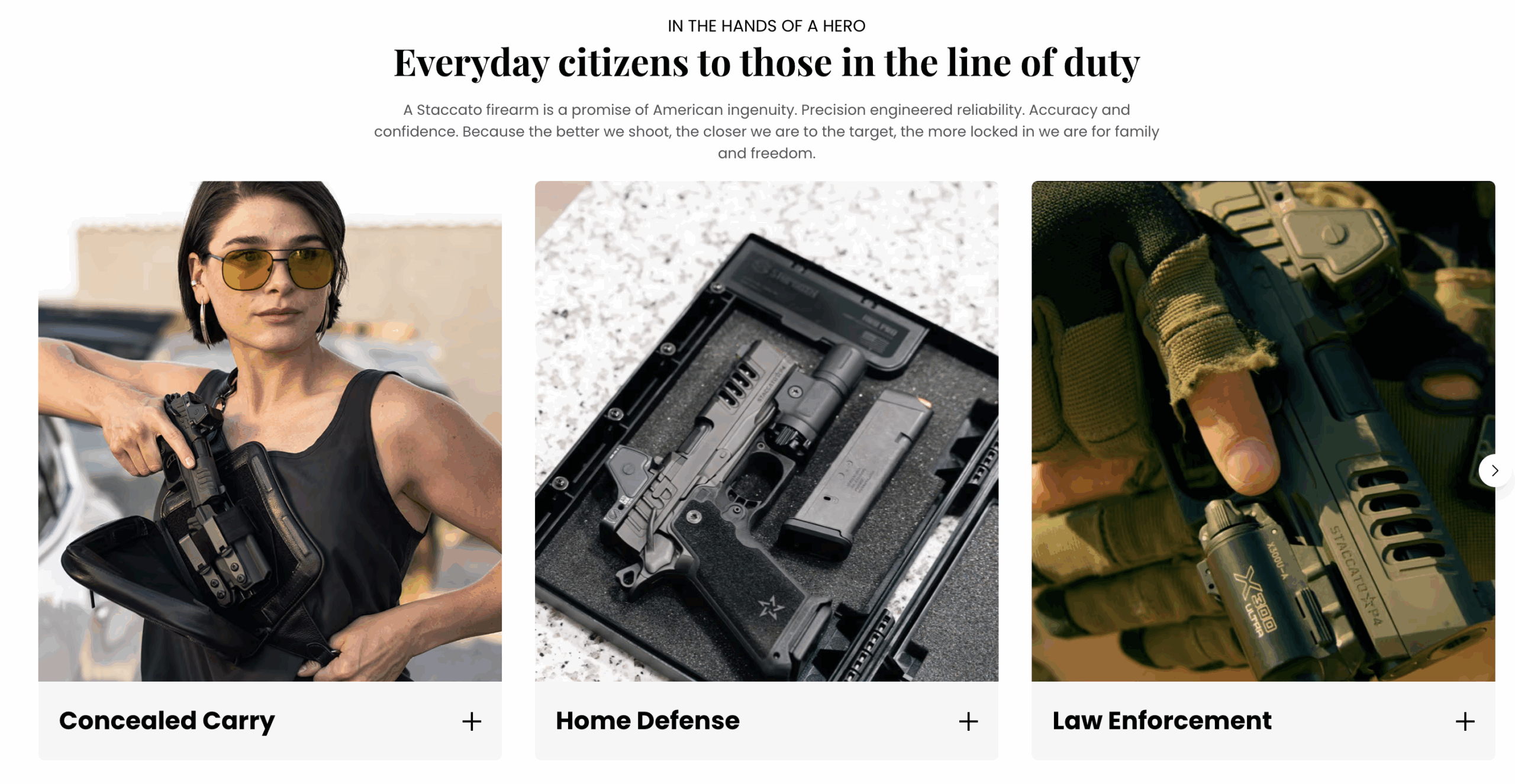
Example of value-based messaging from Staccato.
3. Dealer-Driven Messaging
For decades, the firearms industry has spoken the language of dealers and distributors — technical data, product specs, and performance metrics. That B2B mindset shaped how brands communicated, trickling down to consumers who were taught to think in terms of features, not feelings.
But the market is changing. Research from Southwick Associates and insights from Shooting Industry Magazine reveal that today’s buyers are increasingly motivated by lifestyle, values, and identity — not just engineering (as referenced in point #1). Younger generations and newcomers to the firearms community are motivated by authenticity, a sense of belonging, and a shared purpose. This desire isn’t unique to the firearms space—it mirrors what drives loyalty in every category, from cars and clothing to footwear and beyond.
Brands like Staccato, Leupold, and Silencer Central are proving that storytelling rooted in identity and lifestyle is a competitive edge. They’re not just selling products — they’re inviting customers into a way of life.
4. Marketing Maturity Gap
Most firearm brands still treat marketing as nothing more than a sales tool rather than the growth engine it should be. Without strategic frameworks or well-defined buyer personas, their messaging defaults to the easiest, most predictable path: features, features, features.
But features alone don’t inspire loyalty — and they don’t differentiate in a saturated market.
Real growth begins when marketing evolves from being a digital brochure to becoming a branded experience. An experience that resonates emotionally, clarifies the customer’s story, and builds trust long before a purchase ever happens. When brands make this shift, they stop chasing transactions and start cultivating advocates — customers who believe in the mission and willingly spread the message.
That’s the maturity gap. And bridging it is where the biggest opportunity lies.
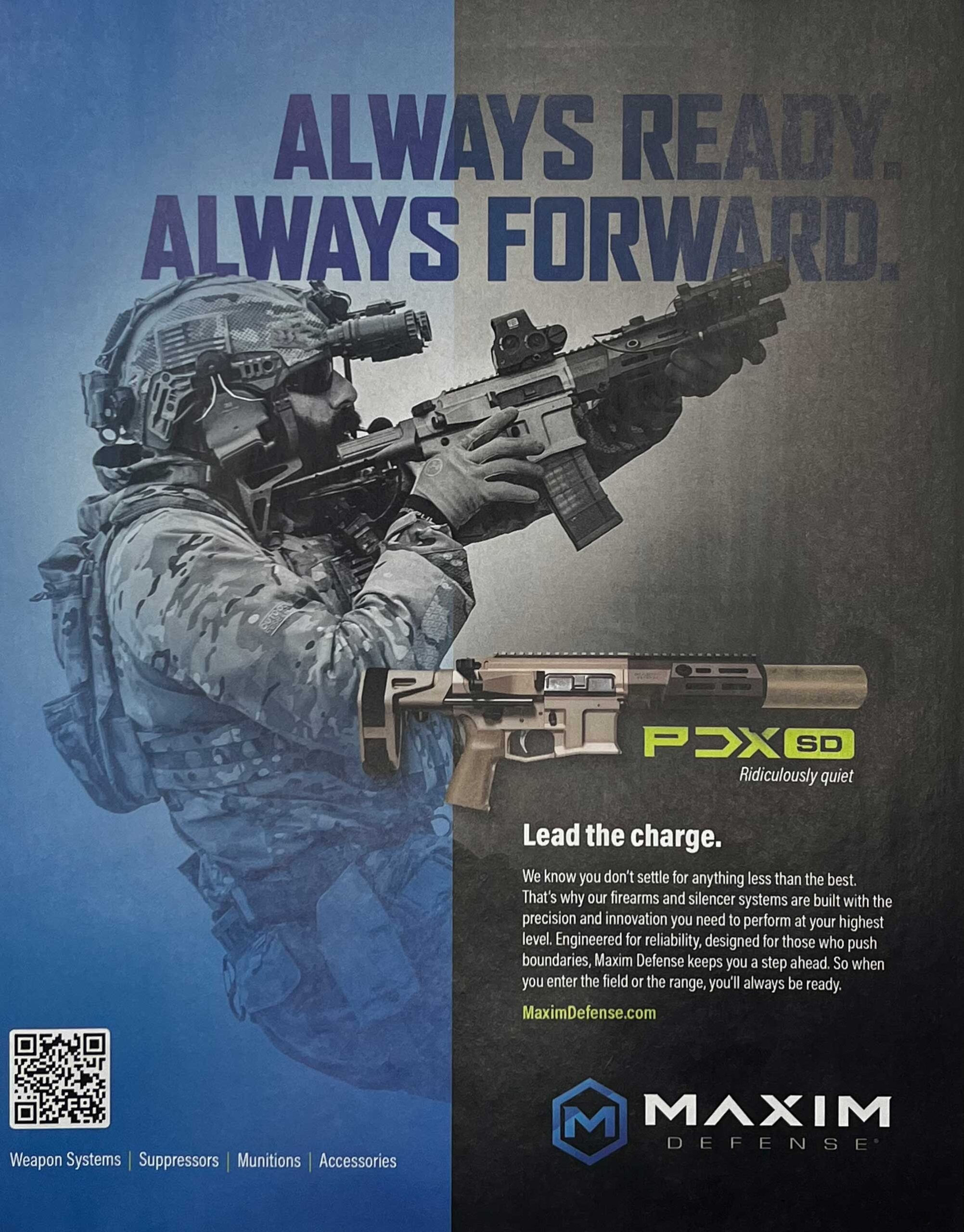
Maxim Defense uses storytelling in its latest ad.
5. The Real Opportunity: Identity and Transformation
Every firearm purchase reflects identity:
- The Defender: “I protect what I love.”
- The Competitor: “I master my craft.”
- The Traditionalist: “I carry forward a legacy.”
- The Freedom-Seeker: “I stand on my own.”
- The Patriot: “This is my 2A right.”
When brands tell stories that position the customer as the hero — and the firearm as the tool that empowers their mission — the marketing suddenly becomes meaningful.
This is the power of storytelling frameworks: they shift the focus from what you make to who your customer becomes after using it. Maxim Defense’s latest ad nails this by reflecting the customer’s identity back to them with the line, “You don’t settle for anything less than the best.”
That simple statement reinforces who the customer aspires to be — a textbook example of identity-driven marketing.
6. The Leaders Already Get It
The top brands in the firearms and hunting industry aren’t just selling products — they’re building tribes. They understand that customers don’t rally around features and specs alone. They rally around identity, community, and shared values. And the leaders are already showing us how it’s done:
- Daniel Defense: “Freedom. Passion. Precision.” A values-driven message that speaks directly to the emotional core of their audience. They’re not just manufacturing rifles — they’re aligning with a worldview.
- Silencer Central: “Simplifying silencer ownership.”
A clear, customer-centered problem-solution statement. It removes friction, builds trust, and positions the brand as the guide who makes a complex process easy. - Vortex Optics: “The VIP experience.”
A community-first mindset. They’re not just selling optics; they’re inviting customers into a tribe built on belonging, loyalty, and exceptional support. Their brand promise reinforces, “We take care of our people.” - Maxim Defense: “Purpose Designed. Duty Built.”
A statement of identity and intent. It speaks to professionals, protectors, and serious shooters who see themselves as mission-oriented. It’s not about parts — it’s about purpose.
These brands understand something crucial: Specs don’t create loyalty. Stories do.
They’re not just promoting products; they’re reinforcing who their customers believe themselves to be. By building tribes rather than spec sheets, they rise above the noise and earn audiences who follow them not just for what they make — but for what they stand for.
7. Your Competitive Advantage
When you reframe features around customer identity, you stop selling a product — and start guiding someone toward who they want to be.
As our market grows more crowded and options increase, firearm brands aiming to stand out from the spec sheet will concentrate on:
- Less product. More purpose.
- Less specs. More story.
- Less brand-first. More customer-first.
Conclusion
Storytelling isn’t a nice-to-have in the firearms industry — it’s a strategic advantage. Brands that connect emotionally and authentically will break out as the market becomes more competitive and options increase, with no end in sight.
Specs describe what your product does. Stories define what your customer becomes. The question isn’t whether you should tell stories — it’s whether you can afford not to.
FREE DOWNLOAD
5 Signs Your Firearm Brand Message is Missing the Mark
Most firearm brands lose sales because their message isn’t clear. This checklist reveals the five most common messaging mistakes and shows you exactly where your brand may be slipping.
Download it and see what to fix first.

FAQS
1. Why is focusing on storytelling more effective than listing firearm specs?
Because stories connect with emotions and identity — the real reasons people buy. Specs inform, but stories inspire and build lasting loyalty.
2. How can a firearm brand tell stories without getting political or controversial?
Focus on empowerment, craftsmanship, and community — not fear or politics. Emphasize responsibility, skill, and personal growth.
3. What are some examples of brands using storytelling successfully?
Brands like Daniel Defense, Vortex Optics, and Silencer Central have all shifted to values-driven, customer-centered messaging that builds connection and loyalty.
4. How can smaller firearm brands start using storytelling?
Start by defining who your customer wants to become — protector, competitor, traditionalist, or freedom-seeker — and craft your brand’s narrative around that transformation.
5. What’s the risk of sticking with feature-based marketing?
You’ll sound like everyone else. Feature-heavy messaging may attract attention but fails to create emotional bonds that drive long-term brand preference.

