Category

Outdoor Industry Marketing

Influencer Marketing Firearms Hunting Industry

What I Discovered About Influencer Marketing in the Outdoor, Hunting and Firearms Industry

By Influencer Marketing, Outdoor Industry Marketing


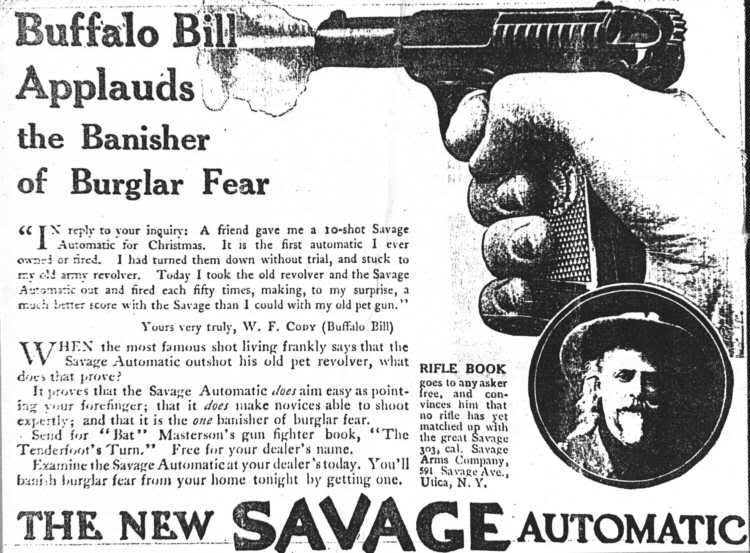
Buffalo Bill Influencer Marketing

Buffalo Bill for Savage Arms

Influencer marketing in the hunting, outdoor and firearms industry has been a tried and true method of connecting with hard to reach demographics since the days of Buffalo Bill.

Often referred to as Pro Staff or Ambassadors—top hunters like Jim Shockey, Steve Rinella, or shooting professionals like Colion Noir and Julie Golob and hundreds of others—have been commissioned by the industry’s top brands to exert their influence over their vast number of social media followers.

Consumers trust recommendations from a third party more often than a brand itself. And it makes sense if you think about it in a more personal context. You don’t usually trust a person at a party who comes up to you and brags about him/herself and spouts fun facts about his/her personality to convince you to be a friend. But you often believe your mutual friend who vouches for that person. An influencer is a mutual friend connecting your brand with your target consumers. (Source: NP Digital)

In this post, I answer five questions about influencer marketing that will help you understand how to integrate this powerful tactic into your outdoor industry marketing strategy.

1. What is influencer marketing?

Influencer marketing is a type of marketing that uses category leaders or celebrities to communicate your brand’s message and content to their vast number of followers. Instead of buying print ads or filming commercials, you use the influencer to get the word out for you instead.

Influencer marketing typically involves content marketing and social media as the mechanisms to propel those messages. Whether they are producing the content themselves like Mia Anstine for Beretta or you are writing it for them and putting their name on it—influencer marketing almost always involves the tactics of content marketing with social media as its primary distribution channel. 


“People feel the need to be informed by accurate information, and when they lack confidence in their own knowledge, they turn to others in the hope that they will provide them with the correct information. By accepting this information, regardless of whether it is accurate, the person is subjected to social influence.”

—Psychologist World (Source: SEMRUSH)


2. How do you find the right influencer?

2.50% of users have between 100,000 and 500,000 Instagram followers. 0.32% of users have between 500,000 and 1,000,000 Instagram followers. Lastly, users with over 1 million Instagram followers represent only 0.31% of total users. Considering this statistic, it should come as no surprise that leveraging the power of this select group of influencers serves as a highly valuable strategy for brands looking to expand their awareness and reach. (Source: Mention)

In the hunting, outdoor and firearms world, the industry is full of shooting, firearm hunting experts, and proponents that blog and create videos. A few are popular celebrities like Luke Bryan or nationally syndicated radio host Dana Loesch. Below, I used Followerwonk and Buzzsumo to identify top Instagram accounts of industry advocates that have large audiences to get an idea of the numbers we’re talking about.

  1. Cameron Hanes / 1.5M
  2. John Lovell / 1.4M
  3. Tim Kennedy / 1.3M
  4. Alex Zedra / 1.2M
  5. Steve Rinella / 1.2M
  6. Hannah Barron / 1.2M
  7. Kirsty Titus / 74K

But how do you go about finding and choosing the right influencer? Do you go for a big name like Mark Kenyon in the hunting category who has over 130K followers on Instagram—or someone less known but who has a very niche group of fans—otherwise known as “power-middle” influencers? Both have pros and cons and will ultimately depend on your product’s contextual fit and marketing budget. There is growing evidence that “power-middle” influencers (2.5K – 25K followers) are shown to have a 16x higher engagement.

To find your perfect influencer, you can start with good ole’ fashion research. Or you can pay for the latest and greatest influencer marketing software to help you find that perfect influencer as well as track ROI. Here are a few to check out:

You can also use sites like Buzzsumo or Followerwonk to start your search. While someone with hundreds of thousands of social media followers certainly could expose your brand to their followers, if they are not a snug contextual fit, their post or tweet would be moot as far as driving leads and customers. (Source: NP Digital)

true-influence-drive-action3. How to start with influencer marketing?

Influencer marketing starts with your ideal influencer image—and if your product fits within the context of what your influencer typically talks about and how they align with your buyer persona(s). You wouldn’t hire Justin Beiber who has over 293M followers to tweet out a picture of your Deer Scent Product next to a fallen Buck (although that may be kinda funny).

Create your ideal influencer based on age, gender, location, vertical, personality and average audience size. Next figure out, where can your brand’s content can be amplified. Do you need the visual component of Instagram or Pinterest or something more substantive and instant like Facebook or Twitter? Are you looking for social media followers, website traffic or both? Define your goals and begin your search.

According to Social Chorus, the best way to reach out to influencers is to start by getting their attention on social media through likes, retweets, mentions and shares. Then you’ll want to reach out via email. Keep your email simple, introduce your brand, why you’re interested and describe what you both can expect to gain through the relationship. You can negotiate your engagement by direct sponsorship, sponsoring their giveaways, content collaboration, shout outs or commission.


4. How to measure influencer marketing?
Below are three ways influencer marketing can be tracked during a campaign.

  1. Trackable links: Most software programs have their own conversion tracking technology that enables you to track how many online sales each influencer drove for you. However, trackable links can only be posted on platforms like Twitter, Facebook, and blogs. 
  2. Promo codes: Not only do promo codes help you track the impact of your campaign, but they also build urgency and an extra incentive for viewers to buy your product.
  3. Correlation: This entails correlating the time of posting with increases in sales or installs.
    (Source: ExpertVoice)


5. Brands doing it right.

As I looked across the industry, here are some examples of brands that base a large majority of their strategy on influencer marketing:


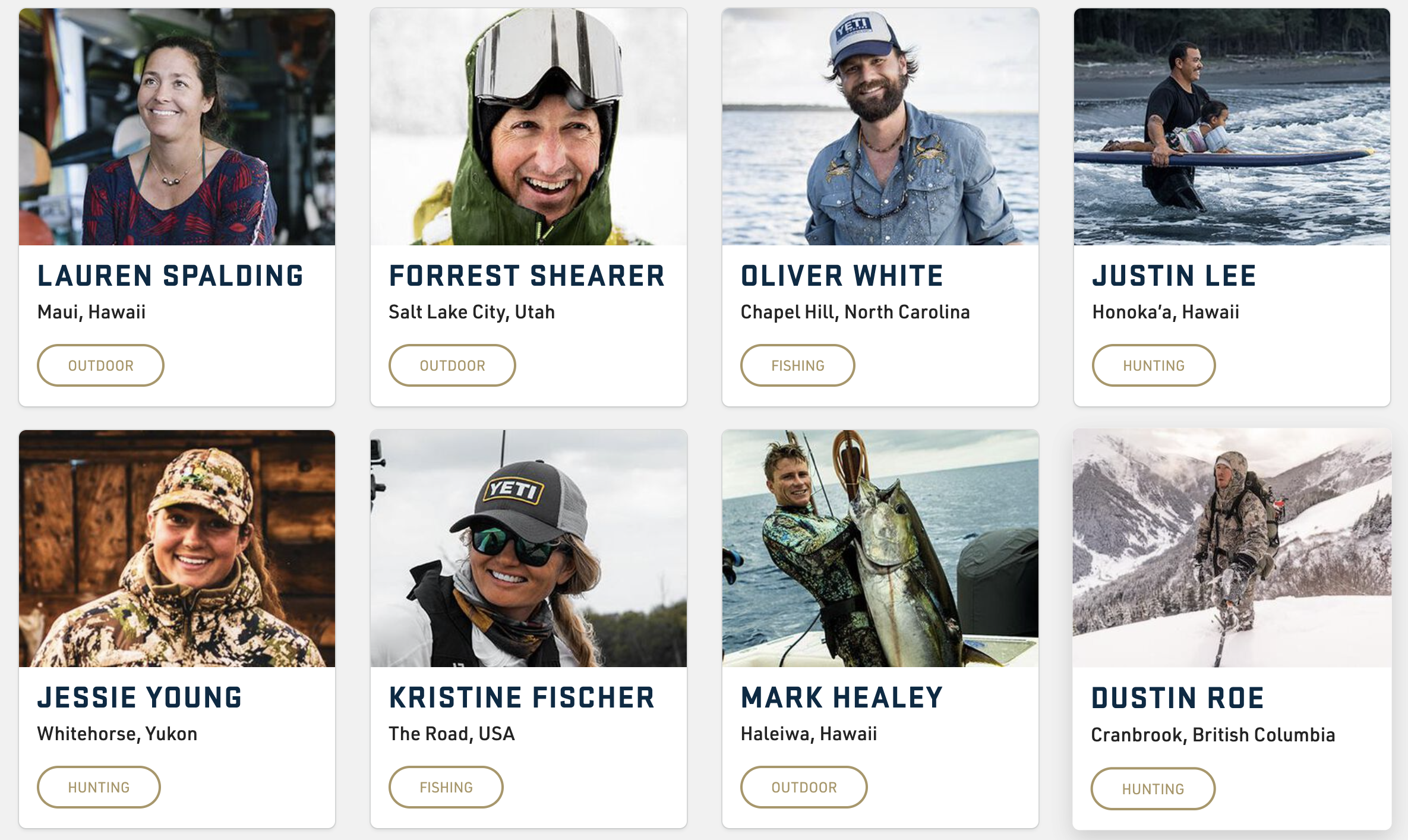
Yeti

Yeti’s influencer marketing program is known as probably the best in the outdoor industry. “We do a lot of endorsements, from celebrity hunters to fishermen, and always try to engage them as ambassadors of the brand and then tell their stories in as many places as we can.”
—Corey Maynard VP of Marketing (Source: Adweek)  


Cabela’s

Cabela’s has about 20 “authenticity experts” who are asked to chime in on their areas of expertise (hunting, fishing, camping, etc.) to make sure their messaging truly matches the outdoor and hunting space. These are people who volunteer to participate because they are passionate about their own experiences, social media, and Cabela’s brand. (Source: Convince and Convert)


Mountain Ops

Mountain Ops uses several hunters/huntresses or “wilderness athletes” to inspire and help you get in “outdoor shape.” I love the vibe of MTN Ops, its a super cool brand that attracts super cool influencers. 

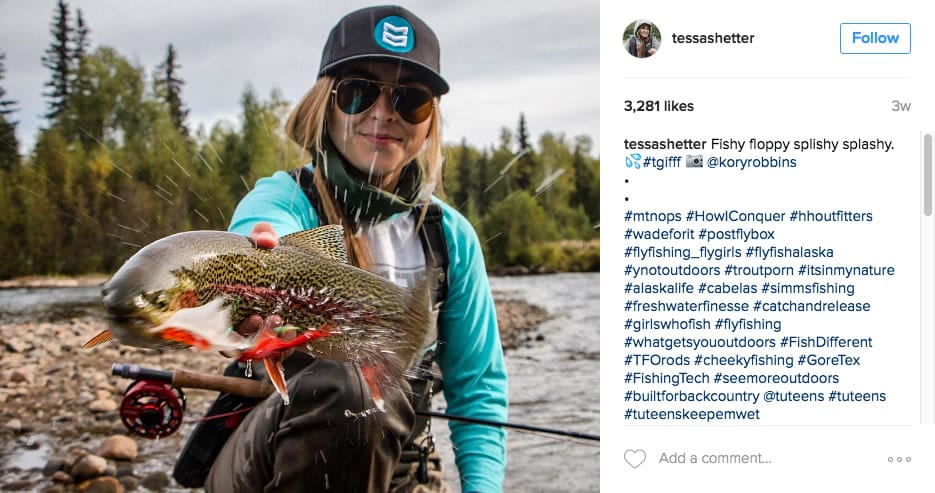
Hunting Influencer Marketing

Photo by Mountain Ops via Instagram


Glock

Glock was  the first in the industry to start using Facebook Live in 2016. In 2023, they continue to rely on influencers and their pro teams to build awareness and authority. This is a great example of mixing influencer marketing, content and live video.


Consumers have always valued opinions expressed directly to them. Marketers may spend millions of dollars on elaborately conceived advertising campaigns, yet often what makes up a consumer’s mind is not only simple but also free: a word-of-mouth recommendation from a trusted source. (Source: McKinsey)

So, is influencer marketing a right strategy for your brand? Here are a few statistics:

  1. In 2022, the influencer market in the U.S. was valued at a record 16.4 billion.
  2. 1 in 4 marketers currently leverage influencer marketing.
  3. 72% of Gen Z and Millennials follow influencers on social media.
  4. 89% of marketers who currently engage with influencer marketing will increase or maintain their investment in 2023.
  5. 17% of marketers plan to invest in influencer marketing for the first time in 2023.
  6. 38% of marketers say generating sales was their top goal for influencer marketing in 2022.
  7. 50% of Millennials trust product recommendations from influencers. This drops to 38% for product recommendations from celebrities.
  8. 92% of marketers believe that influencer marketing is an effective form of marketing.
  9. 33% of Gen Z-ers have bought a product based on an influencer’s recommendation in the past three months.
  10. Micro-influencers generate up to 60% more engagement than macro influencers.
  11. 44% of marketers say that the biggest benefit of working with micro-influencers is that it is less expensive.
  12. 56% of marketers who invest in influencer marketing work with micro-influencers.” 

(Source: Hubspot)

In the hunting, outdoor and firearms industry, I’d say there is overwhelming evidence that influencer marketing is a good way to move the needle. Combined with inbound or content marketing, influencer marketing could be the strategy you’re looking for.

What about you, what are your thoughts on influencer marketing? 


outdoor storybrand brandscript marketing

Unleash the StoryBrand BrandScript in Your Outdoor, Hunting or Shooting Sports Brand

By StoryBrand, Outdoor Industry Marketing

In the realm of outdoor industry marketing and branding, captivating your audience’s attention and compelling them to take action is the ultimate goal. However, achieving this outcome can be challenging without a clear and persuasive message that resonates with your target audience. This is where StoryBrand’s BrandScript comes into play.

In this blog post, we will help you understand what a StoryBrand™ BrandScript is and how it can revolutionize your approach to messaging and breaking through the clutter of today’s distracted environment.

Defining the StoryBrand BrandScript

The StoryBrand BrandScript is a framework developed by Donald Miller and his team at StoryBrand. At its core, the BrandScript is a tool that helps businesses craft a compelling and cohesive narrative that engages their customers on a deep emotional level through our brains natural tendency to latch on to a story. It provides a structured approach to clarifying your brand’s message and ensuring consistency across all marketing channels. This is important when making the most of your marketing dollars.

StoryBrand for the Outdoor Industry

Components of a BrandScript

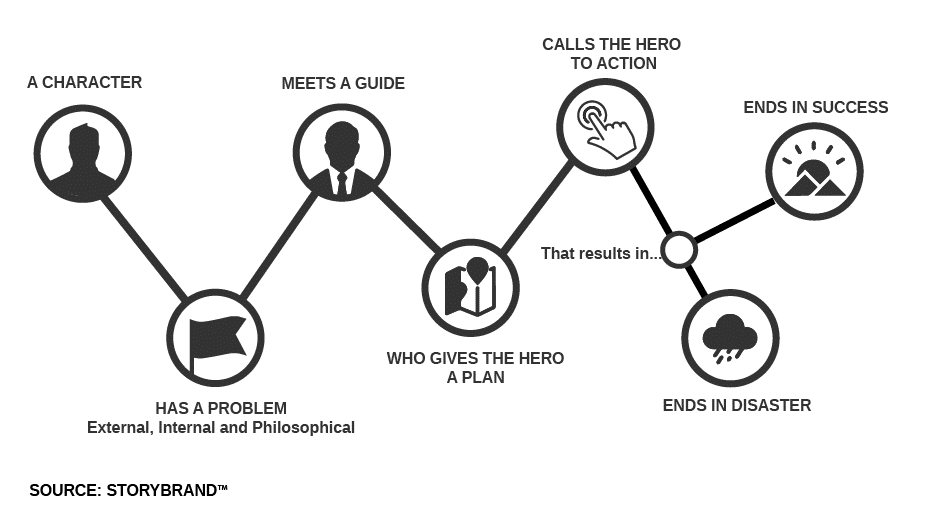
  1. The Character: Every great story needs a protagonist, and in the BrandScript, that protagonist is your customer. By understanding your customer’s desires, challenges, and aspirations, you can position your brand as the guide who will help them overcome obstacles and achieve their goals.
  2. The Problem: Every customer is faced with a problem or a challenge that needs to be solved. Clearly identifying and articulating this problem in your BrandScript allows your audience to connect with your brand on a personal level. It demonstrates that you understand their pain points and are uniquely positioned to provide a solution.
  3. The Guide: As the brand, you play the role of the guide who will help your customer overcome their challenges. Positioning your brand as the trusted advisor who has the expertise and knowledge to lead your customers toward success is essential in establishing credibility and building trust.
  4. The Plan: Once the problem is defined, your BrandScript should outline a clear and actionable plan for your customers to follow. This plan should outline the steps they need to take to overcome their challenges and achieve their desired outcomes. Providing a roadmap instills confidence in your customers and empowers them to take action.
  5. The Call to Action: Every successful brand knows the importance of a compelling call to action. Your BrandScript should clearly define the next steps you want your customers to take. Whether it’s signing up for a newsletter, making a purchase, or scheduling a consultation, a strong call to action prompts your audience to engage with your brand and move closer to becoming loyal customers.
  6. Ends in Success: Every hero wants a happy ending. Your BrandScript should define what success looks like if your customer buys your product. What are you helping them achieve?
  7. Ends in Failure: You must also show what the hero is trying to avoid. What happens if they don’t buy your product? What are the negative outcomes?

Benefits of Using a BrandScript

  1. Clarity: The BrandScript framework brings clarity to your messaging by focusing on the core elements that resonate with your audience. By clearly defining your customer’s problem and positioning your brand as the solution, you can communicate your value proposition more effectively.
  2. Consistency: With a BrandScript, you can ensure consistency in your brand’s messaging across various marketing channels. This consistency strengthens your brand identity and fosters trust and recognition among your audience.
  3. Engagement: The StoryBrand BrandScript is designed to captivate and engage your audience by leveraging the power of storytelling. By structuring your message in a narrative format, you can create an emotional connection that resonates deeply with your customers.
  4. Conversion: Ultimately, the goal of any marketing effort is to convert leads into customers. The BrandScript helps optimize your messaging to drive conversions by compelling your audience to take action and make a purchase.


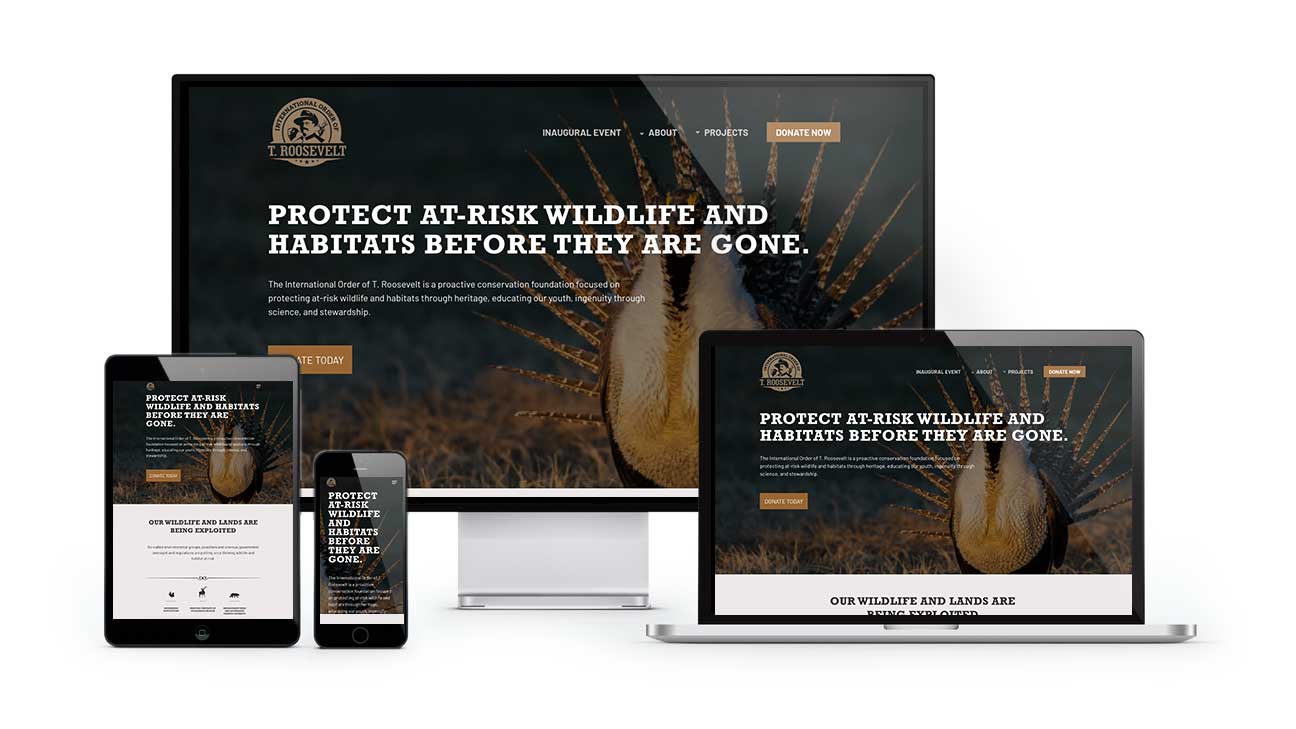
IOTR Outdoor Web Design

IOTR StoryBranded Website


Crafting a compelling brand message is a critical component of successful outdoor, hunting or firearms marketing. The StoryBrand BrandScript provides a powerful framework that allows businesses to create engaging narratives, connect with their target audience, and drive meaningful results. By defining your customer’s problem, positioning your brand as the guide, and outlining a clear plan of action, the BrandScript empowers your business to tell a story that captivates, converts, and inspires loyalty. Embrace the power of storytelling and leverage the StoryBrand BrandScript to take your brand messaging to new heights.

Outdoor Instagram Marketing

How To Create a Instagram Social Media Strategy For Your Outdoor Brand

By Social Media, Outdoor Industry Marketing

Instagram is a powerful tool for outdoor, hunting, and shooting sports businesses of all sizes. It can be used to build brand awareness, connect with customers, and drive traffic to your website. If you are a business owner our outdoor industry marketing manager who sells products or services that can be enjoyed outdoors, it is especially important to have a social media strategy in 2022.

In this article, you will learn the necessary components of a Instagram social media strategy for outdoor brands and get some tips to get started.

Goal

As with any marketing strategy, you should always start with a goal. Setting a goal gives you strategic direction and outlines where you are going and provides a context in how to get there. Without a goal, you are simply posting content for the sake of posting. So, what do you want to achieve with Instagram? Do you want to increase brand awareness? Drive traffic to your website? Sell more products? Once you have answered this question, you can start to develop your strategy.

Sample Goal: We will accomplish a 20% increase in Instagram followers by Q3 because we want to build brand awareness of our new broadhead.

Target Audience

Who is your target audience or buyer persona? This is an important question to answer as it will dictate the type of content you share, the tone of your posts, and the social media platforms you use. For example, if you are targeting young adults who are active and enjoy spending time outdoors, hunting or fishing, you will want to focus on platforms like Instagram. However, if your target audience is politicos fighting for 2A and conservation rights, you will want to be active on platforms like Twitter or TruthSocial. 

Additional Reading: 5 Ways Social Media Works For Your Hunting Company

Now that you have a basic understanding of what you need to get started, you have to develop 7 talking points based around the art of storytelling. Creating this framework or communication playbook will provide you the guidance you need to ensure each social media post is on brand, on message, and adds value to your audience. The most important aspect of this approach is you know what to say and what order to say it in.

The following should be included in your Instagram strategy:

  • Name your campaign: product launch, hunting season, holiday season, ATA Show, etc.
  • A content calendar
  • Key messaging
  • A process for creating and curating content
  • Posting frequency
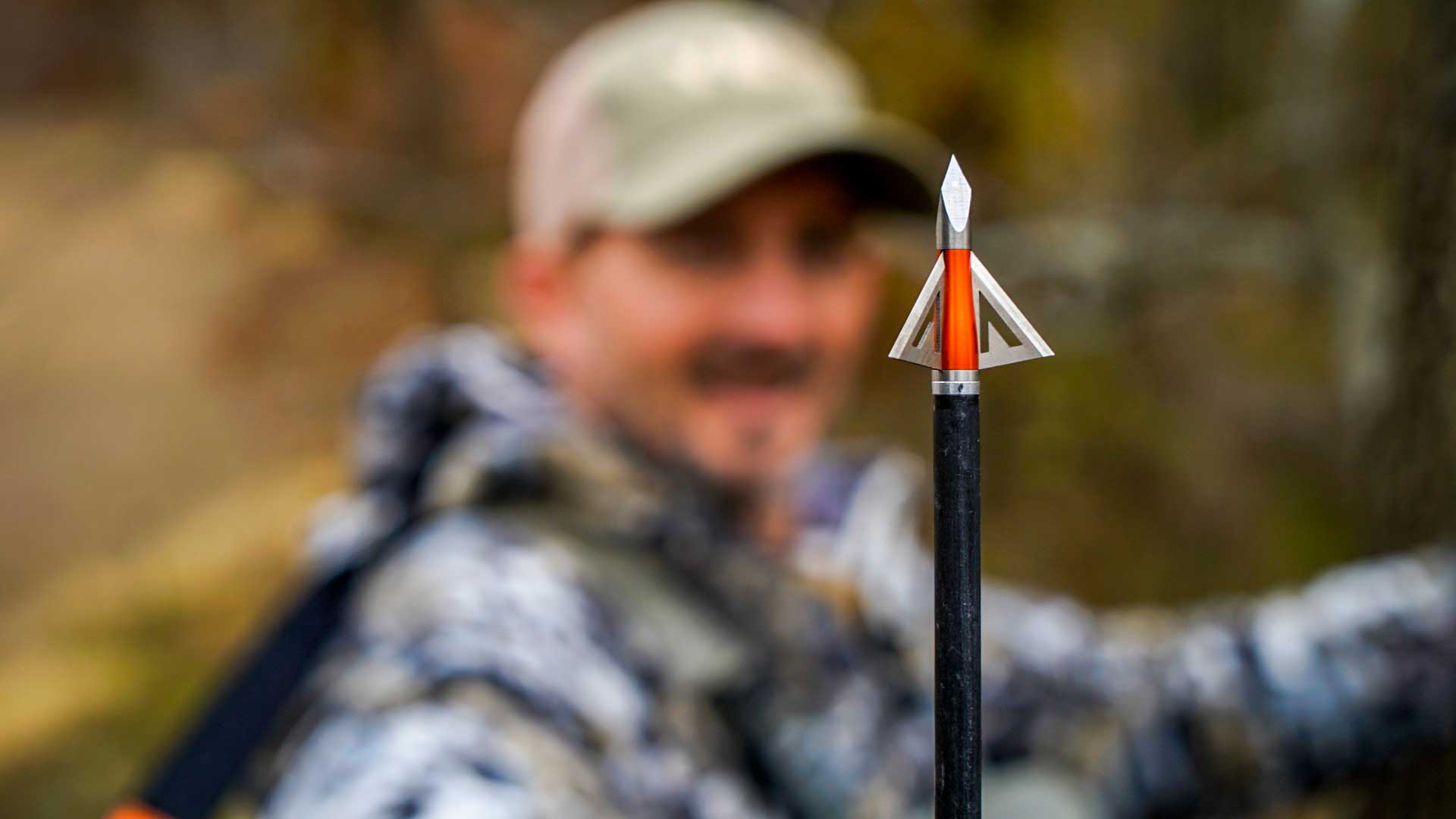
controlling idea

Photo credit: Spectre Broadheads

1. Controlling Idea

First, start by creating a controlling idea. A controlling idea is the “why” or the point of why you are posting. Every Instagram campaign should have a controlling idea. This ensures that all your posts in your campaign has a purpose and is not just random content.

In the following, we’re going to use an archery broadhead product called Buck-O’ as an example. Your posts might revolve around the following controlling ideas:

  • Buck-O is different than other broadheads because it flys farther and straighter
  • Buck-O performs in extreme conditions
  • Buck-O is hand made from 0.36 stainless steel blades

2. Story Question

The story question is the question you must posit in your customer’s mind: Will this product help me harvest more bucks? Will my broadhead fail when I have that once-in-a-lifetime shot? The story question outlines the problem and the what-ifs.

The human brain is a problem-solving device. When you give it a problem it’s interested in, it will work on that problem until it solves it. This is called the reticular activating system, and you can use this to your advantage on social media by agitating the problem your customer is having.

For example:

  1. Tired of your broadhead failing?
  2. Does your broadhead leave a big enough blood trail?
  3. Did your broadhead not perform as advertised?

3. Agitate the Problem

Next, create a statement that agitates the problem further. The key here is to take the problem your broadhead solves and make the situation worse. Taking what we created above, add the agitation:

  1. Tired of your broadhead failing? That buck get away again?
  2. Does your broadhead leave a big enough blood trail? Great shot, but now you can’t find where your trophy shot went.
  3. Did your broadhead not perform as advertised? Your family is not going to be happy. 

See how we stated a problem our customer is having and then agitated it a little more? This is what you need to do in your social media posts.

The next step is to come up with what’s at stake.

4. The Stakes

If there are no stakes in a story, then it’s not a story. The stakes are what make the story interesting and worth telling.

Once again, let’s add to the above…

  1. Tired of your broadhead failing? Did that buck get away again? The season ends next weekend.
  2. Does your broadhead leave a big enough blood trail? It looked like a great shot, but now you can’t find where trophy shot went. That freezer is going to be bare this winter.
  3. Did your broadhead not perform as advertised? Your family is not going to be happy. You don’t want to tell them you had another mechanical broadhead malfunction.

In the next section, you get to save the day by coming in and helping your customer save the day.

Photo credit: WASP Archery

5. The Guide

The guide is you. Your customer is the hero. Your brand is not the hero in your story, your customer is. So many brands in the industry want to play the hero. So now that you’ve stated a common problem, agitated it, and described the stakes you now get to step in like Yoda (or Morpheus) and save the day. For more on the what it means to play the guide, read this post. 

  1. Tired of your broadhead failing? Did that buck get away again? The season ends next weekend. Luckily Buck-O broadheads have a 100% open rate and will never fail you.
  2. Does your broadhead leave a big enough blood trail? It looked like a great shot, but now you can’t find where trophy shot went. That freezer is going to be bare this winter. We understand what it’s like to make a great shot only to see your trophy run away, thats why Buck-O broadheads are consistent, durable and reliable.
  3. Did your broadhead not perform as advertised? Your family is not going to be happy. You don’t want to tell them you had another mechanical broadhead malfunction. We had enough of the silent treatment when coming home empty-handed and decided to do something about it and created Buck-O broadheads.
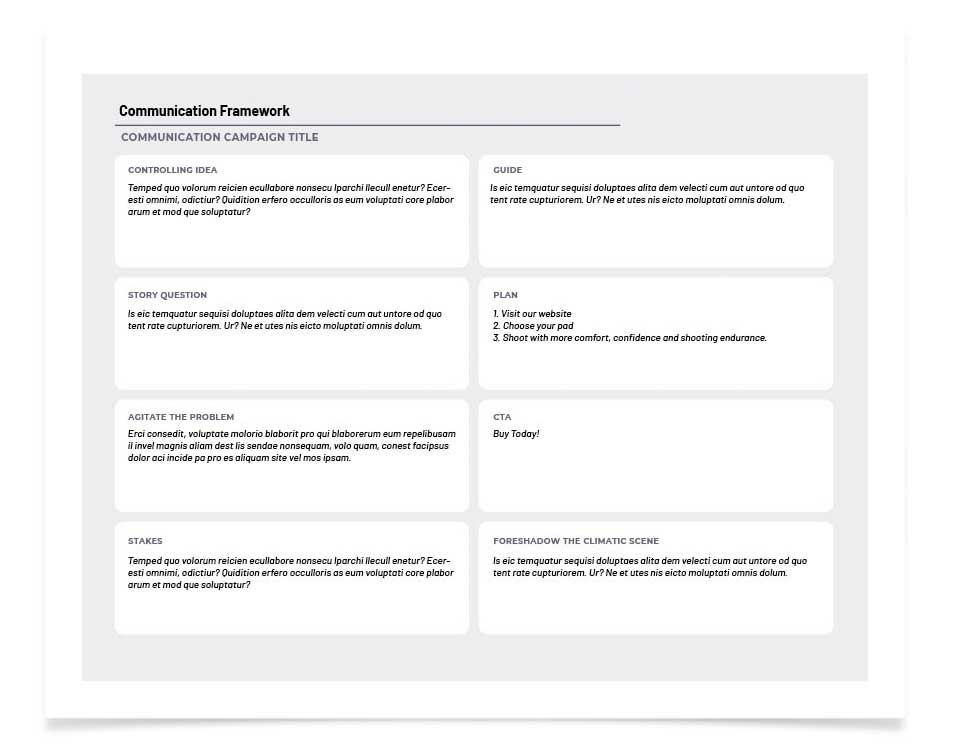
Outdoor Communication Framework

Create a sheet like this to outline your talking points.

6. The Plan and Call to Action

Every guide has to give the hero a plan to win the day and call them action. Next add your plan on how to solve their problem and what to do next. Give them the stepping stones to cross the creek and a clear yes or no decision.

  1. Tired of your broadhead failing? Did that buck get away again? The season ends next weekend. Luckily Buck-O broadheads have a 100% open rate and will never fail you. To keep bucks from getting away, go to our website and buy one today.
  2. Does your broadhead leave a big enough blood trail? It looked like a great shot, but now you can’t find where trophy shot went. That freezer is going to be bare this winter. We understand what it’s like to make a great shot only to see your trophy run away, that’s why Buck-O’ broadheads are consistent, durable, and reliable. Shop our website or see your local dealer.
  3. Did your broadhead not perform as advertised? Your family is not going to be happy. You don’t want to tell them you had another mechanical broadhead malfunction. We had enough of the silent treatment when coming home empty-handed and decided to do something about it and created Buck-O’ broadheads. Our broadheads are field tested and proven. Go to our website, shop our broadheads and have it delivered to your door in 3 days!

Lastly, we want to end our posts by foreshadowing the climatic scene.

7. Foreshadow the Climactic Scene

Now add the last piece of your post by foreshadowing the climatic scene. This is typically the outcome or the do-or-die moment in your short story that satisfies the brain’s desire to solve the problem.

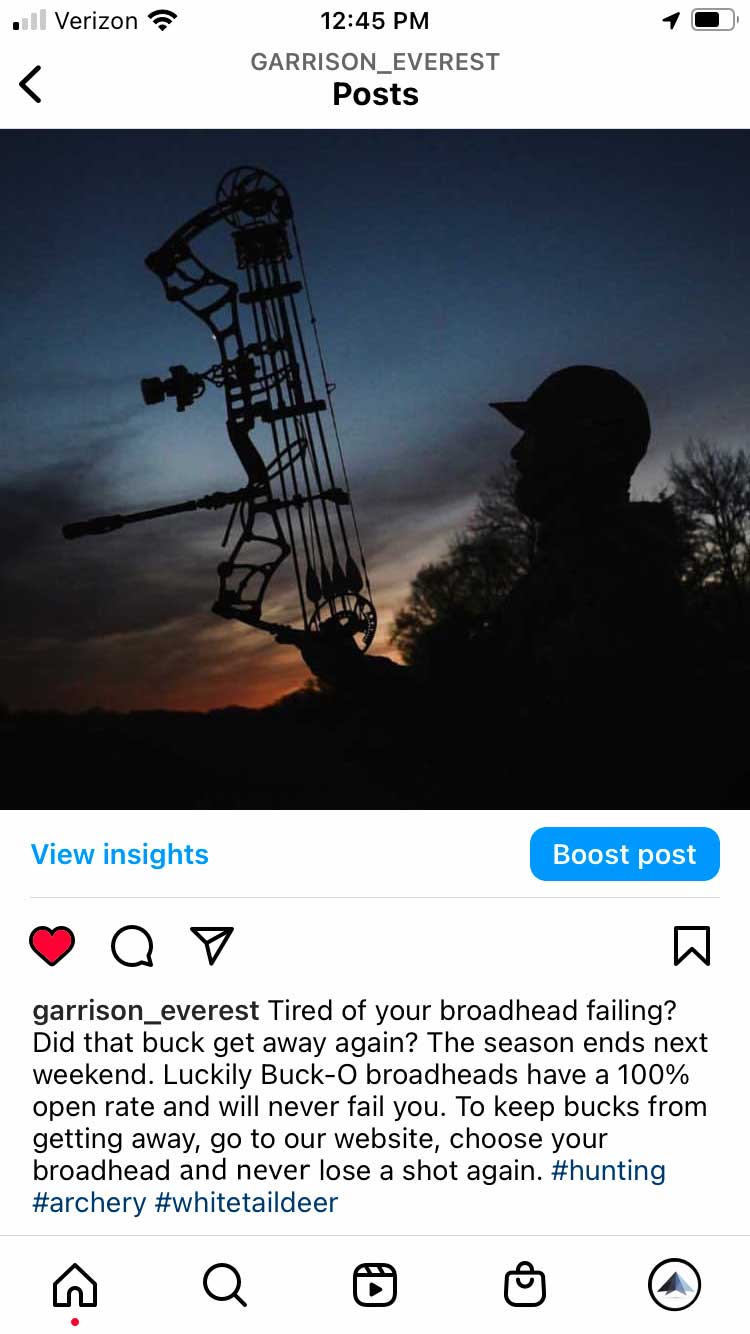
  1. Tired of your broadhead failing? Did that buck get away again? The season ends next weekend. Luckily Buck-O broadheads have a 100% open rate and will never fail you. To keep bucks from getting away, go to our website, choose your broadhead. Never lose a shot again. #hunting #archery #whitetaildeer
  2. Does your broadhead leave a big enough blood trail? It looked like a great shot, but now you can’t find where your trophy shot went. That freezer is going to be bare this winter. We understand what it’s like to make a great shot only to see your trophy run away, that’s why Buck-O’ broadheads are consistent, durable, and reliable. Shop our website or see your local dealer and make bigger blood trails. #hunting #deerseason #whitetaildeer #archeryhunting
  3. Did your broadhead not perform as advertised? Your family is not going to be happy. You don’t want to tell them you had another mechanical broadhead malfunction. We had enough of the silent treatment when coming home empty-handed and decided to do something about it and created Buck-O’ broadheads. Our broadheads are field tested and proven. Go to our website, shop our broadheads and have it delivered to your door in 3 days! Join the Buck-O’ brotherhood and make your family happy. #hunting #archerylife #deer

A quick word on #hashtags

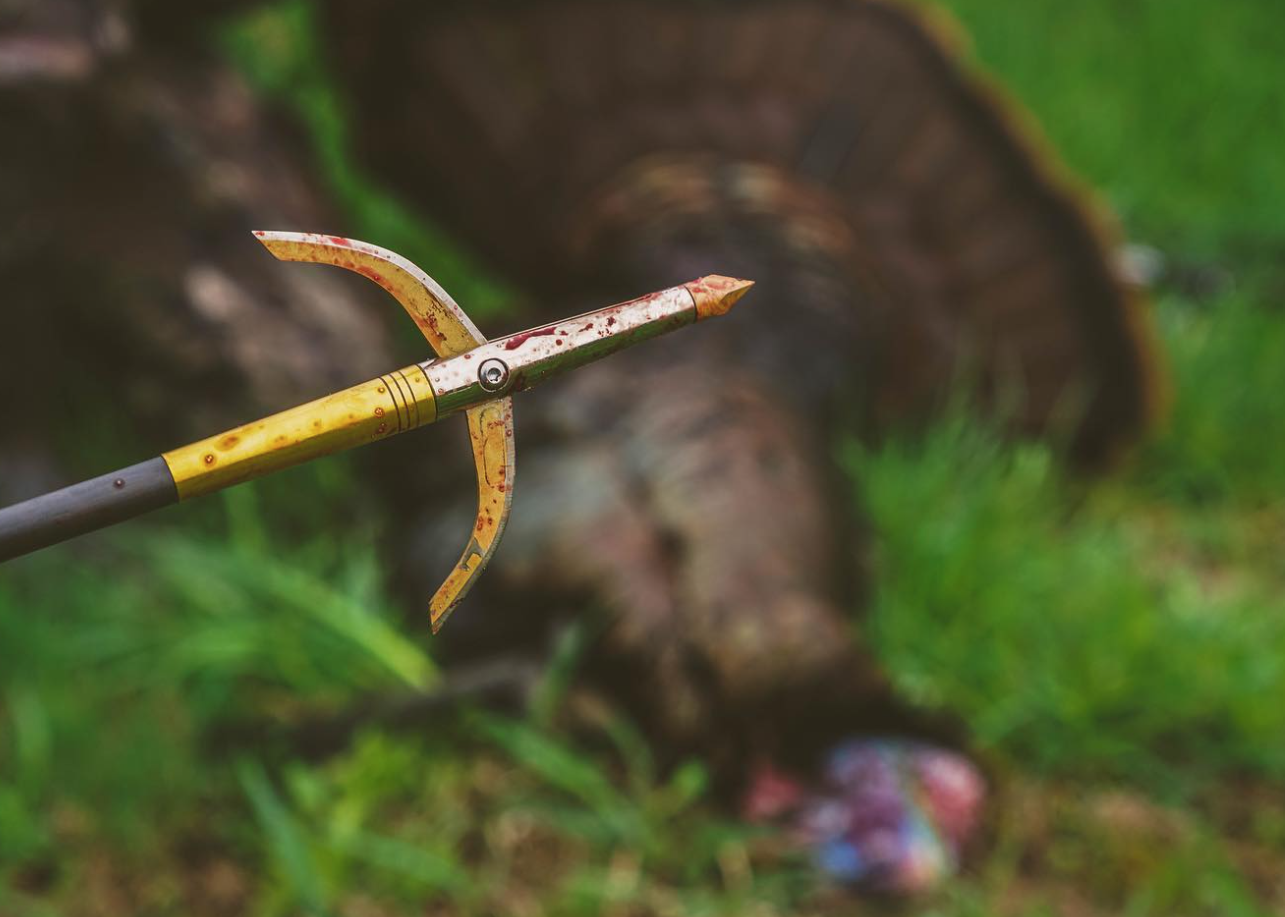
Hashtags are used so others can find you. Here are three rules of thumb. You can use up to 11 hashtags, don’t use the same hashtags over and over again and you can bury them if you don’t want them to be seen by adding spaces or placing them in the comments. Instagram does ban some hashtags but they don’t make the list public. For guns and other hunting hashtags experiment with your hashtags to see which ones get the most engagement (views, likes and shares). This will help you understand if you’re being throttled. If you post a bloody picture, you most likely won’t see it show up in the feed or it may get blocked or flagged.

Instagram Post Example8. Add a professional photo or video

Now that you have a basic framework on how to write engaging posts that get results, you need to identify and reach out to a photographer/videographer who can bring your posts to life. Content is king. Professional imagery and video will provide your followers with engaging, memorable content that will make them want to follow you and purchase your products.

Right now, Instagram seems to favor reels (short videos). Try experimenting with short videos and track your results in the form of views, likes, shares, website traffic, email signups and sales.

9. Bring it all together by combining Instagram with email

Due to the unfair and illegal censorship of our industry, you must drive your followers to sign up for your emails to stay informed. A lot of times they won’t see your posts, especially on Facebook. You can also use other platforms like GoWild, TruthSocial, or MeWe to reach a wider audience. You can also sign up influencers to help expand and create content for your brand.

So in conclusion, an effective social media strategy for an outdoor, hunting to shooting sports brand should include:

  • A goal
  • Target audience
  • A short, attention-grabbing intro/headline
  • Compelling copy that tells a story and/or solves a problem
  • Professional imagery or video
  • A call to action telling the audience what you want them to do next
  • Hashtags
  • Double down with email
  • Expand with influencer marketing

Now that you have the framework, go out and create content that will engage your audience and convert them into customers. If you got questions, give us a call or signup for an online course in communication to get started.

Outdoor Email Marketing

Three Ways to Catch More Subscribers with Outdoor Email Marketing

By Email Marketing, Outdoor Industry Marketing

Article first appeared in GuideFitter Journal Summer 2021

Most outdoor businesses struggle to find cost-effective ways to harness their outdoor industry marketing website traffic and generate qualified contacts/subscribers. Many will spend hours creating newsletters only to have no one open them or read them. This work results in wasted time and money and ultimately giving up on making email marketing work.

But what if there were a better way? What if people looked forward to your emails and were compelled to open them?

According to HubSpot, a marketing software company, email generates $38 for every $1 spent, which is an astounding 3800% return on investment, making it one of the most effective marketing options available. Furthermore, over 59% of marketers say email is their most significant source of ROI. So how can you take advantage of this highly effective strategy to grow your business?

This article will introduce you to a simple strategy based on a hypothetical guide service (but can be used for product companies too) we’ve implemented numerous times with clients in the outdoor industry that will help you build brand awareness, generate and nurture leads 24/7/365 and add revenue to your bottom line.

Step 1 – Create a Clear Message based on a Story 
Any effective email marketing program should be based on a story-based framework. Psychologists have proven that story is hardwired into our brains. It’s the reason why movies can hold our attention for hours, and campfire hunting stories never get old.

Below is a framework based on a process called StoryBrand™. This framework show you how to write story into your marketing by answering the seven questions your customers are asking in a story-based order. By answering the below questions, you will have all the words you need to write and create an effective automated email program. I’ve also included example responses.

  1. What does your customer want?
    They want the fishing trip of a lifetime. 
  2. What problem does your product or service solve?
    Our guided trips give you memories that last forever.
  3. Have you positioned your service as the solution to their problem?  We understand what it’s like to want to fish the most exciting locations in North America, which is why we specialize in dream fishing trips.
  4. How do they do business with you? Or, in other words, how do they go about booking a trip with you?
    To book your dream fishing trip, pick your date, complete our questionnaire and submit deposit. 
  5. What is the call to action?
    Book Now!
  6. What does a successful fishing trip look like?
    Smiling faces of past clients with monster trout.
  7. What does it look like if they don’t choose your service?
    We make you feel at home and won’t leave you going home empty-handed.

By taking the time to answer the above questions, your business will have a more straightforward message and copy blocks to create the emails outlined below.

For more information on how to clarify your message and write your business’ story, check out this article.

Step 2 – No One Wants Your Newsletter
Once you have your story questions answered, you now need to create a way to collect email addresses. It may come as a shock to you, but prospective customers don’t want to read your newsletter. They want to know more about how you’re going to solve their problem, deliver a world-class experience, and create a lifetime of memories.

Two types of buyers show up on your website: direct and transitional.

  • Direct buyers are people who know of you, heard about you, or got referred to you and are ready to book.
  • However, transitional buyers need more information and time to understand what you offer. For this reason, we suggest creating a lead generator. A lead generator is a piece of content (ebook, video series, checklist, or guide) that warms your prospect up to the idea of doing business with you. They should find your lead generator valuable enough to give you their email address. For example, you may create an ebook that showcases the area your fishing in more detail—complete with specifications, maps, fantastic photography, and success stories. Or you may design a “What to Bring to on your Fishing Trip” checklist that gives your prospect a better idea of what to expect that smooths out any fears, concerns, or questions they may have. The idea here is to get them to say, “tell me more.” Put yourself in your prospective client’s shoes and give them something they will find both valuable and memorable.

Step 3 – Write Your Automated Email Sequence the Right Way
Once you’ve had your web developer add a form to your website for prospects to download your lead generator, you now want to keep the interest and momentum going by staying top of mind in their inbox.

The human brain needs to see your brand message 7-8 times before it can be internalized, noticed, and taken action on. Also called the Rule of 7. We live in a high-distraction world, and it’s easy for people to forget why they visited your website, so it’s your job to remind them.

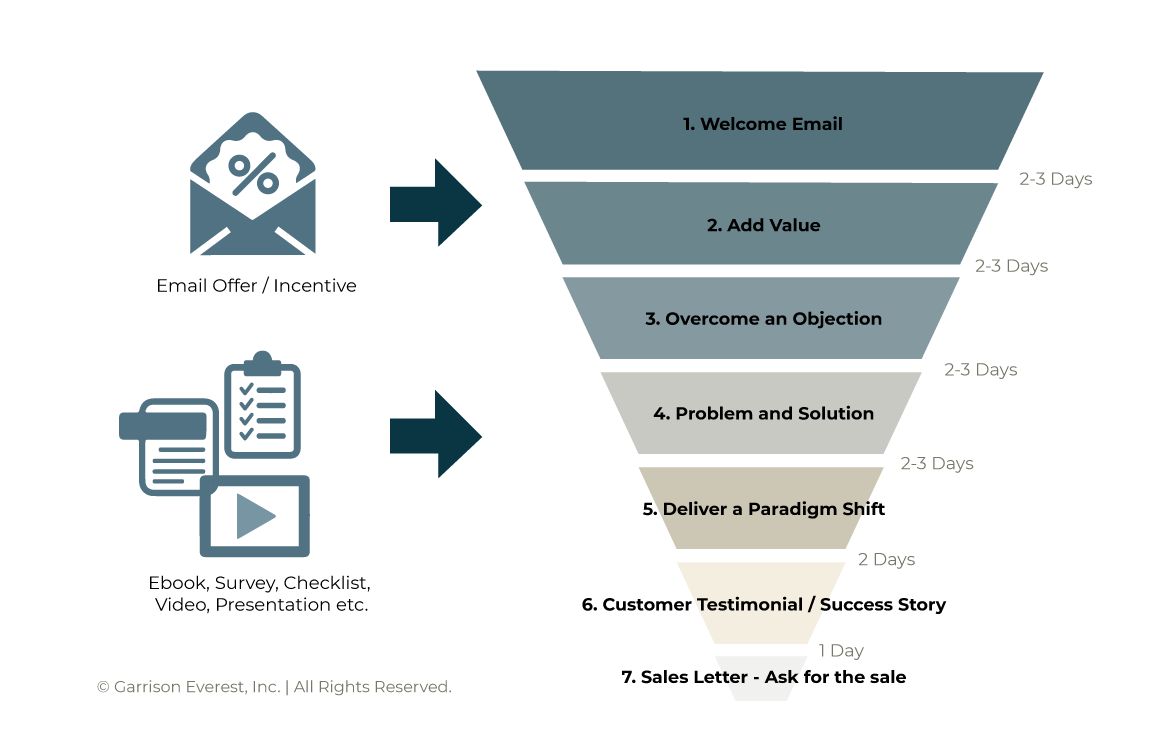
At this point, you’ll want to pull out the answers to your story questions and begin using them to create your copy. Each email should be sent 2-3 days apart at 7 AM to your prospects’ time zone.


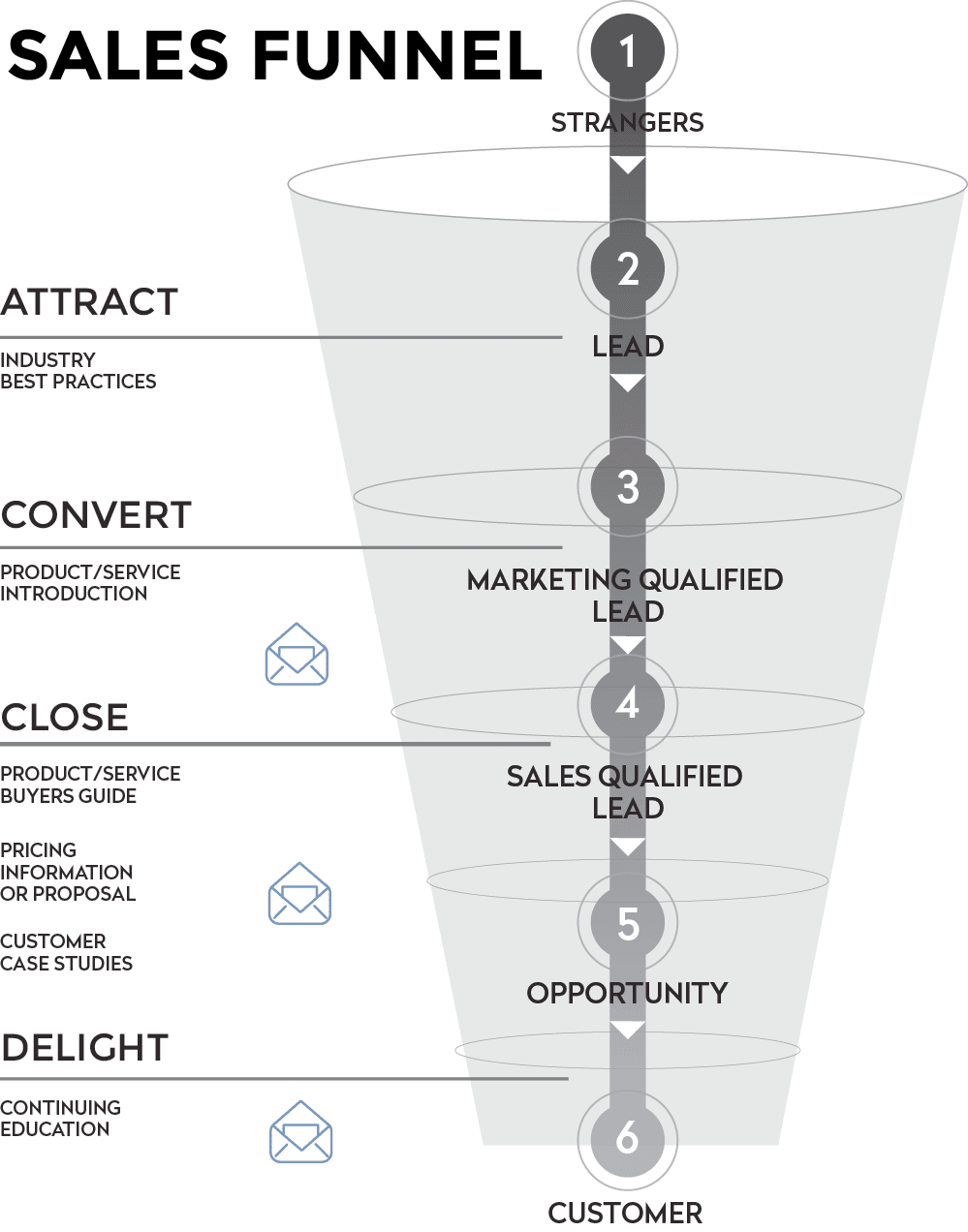
Outdoor Marketing Sales Funnel

The email should also include:

  • Your logo
  • Links to your social media accounts
  • Contact information
  • One button at the bottom that calls the prospect to Book Now/Buy Now
  1. Welcome Email – The welcome email is just what it sounds like. It’s your chance to thank them for downloading the lead generator and introduce them to your product or service by stating the problem you solve. You may want to welcome them to your family or give them a discount on any future bookings or sales.
  2. Add Value #1 The second email should offer helpful information. Resist the urge to sell—try to help. For example, you may want to talk about making the most of their guide trip or offering best practices when traveling with equipment.
  3. Add Value #2 – The third email should, again, add value. This time you may want to offer recipes or tips on how to stay warm and dry at altitude in October. Once again, the idea is to warm your prospect up to the idea of doing business with you.
  4. Overcome an Objection – At this point, you should see an average open rate of 50% and click-through rates around 20%. These are good indicators that your prospect is still interested in your service. This email should begin to address any friction points they may be having. Friction points consist of price, the location of your lodge, fitness level, or transportation obstacles. Address those objections and offer solutions with transparency.
  5. Problem and Solution – In this email, list the problems your guide service solves. People book guided trips for all kinds of reasons. Perhaps they’ve always dreamed of fishing the Miracle Mile in Wyoming. Maybe they are taking their son or daughter for their first fishing trip. Or they are looking to create some lifelong memories with their friends. Address these problems and what the customer wants—and tell them how you solved them with past clients.
  6. Deliver a Paradigm Shift – A paradigm shift means your prospective customer thought one way about your guide service but now thinks differently. For example, they may have considered all guide services are the same—when in fact your guide service offers much more. If your service or product is different, explain why that is.
  7. Customer Testimonial/Success Story – Next is the email that tells what your customer’s life looked like before they booked a trip with you and how their life has changed after their trip. Ask for your clients to provide their stories and highlight them in this email.
  8. Close with a Sales Letter – Finally, if they haven’t booked with you but are still opening your emails – offer a time-sensitive incentive like 10% off if you book with us by the end of the month. Ask for the sale with a clear call to action: Book Now! If they open the email, reach out personally to close the sale.

The above sequence gives you almost a month of automated emails. It can be used as a baseline strategy to help you create your email automation program. Once you get these emails set up in your email program, begin testing subject headlines and content to see if you can improve open rates, click-through rates, and bookings.

Your lead generator can also double as an advertisement on social media or other platforms. Use it at trade shows and local events to generate leads.

In conclusion, the above gives you a simple strategy for creating an effective lead generation and automated email workflow. Start by clarifying your message through story-based elements. Create a valuable lead generator in the form of an ebook, checklist, video series, or guide that your prospects will exchange their email address for. Then create a series of eight emails that nurture your prospective leads that keep your guide service top of mind, which incentivizes them to book. Don’t worry about doing it perfectly right away. Like anything, it takes time to get it right. Just by having this strategy in place, you’ll begin to see results that grows your business.


Photography Influences Outdoor Lifestyle

How Photography Influences Outdoor Lifestyle

By Outdoor Industry Marketing

If you’re reading this, you’ve probably struggled with or maybe even have gotten into an all-out inner-conflict over the cost of photos you should purchase for your website or upcoming outdoor industry marketing campaign.

Should you go cheap and pick some “canned” image from iStock that costs only $10—or go big with the $500 shot from Offset. Or go even bigger and hire a professional outdoor lifestyle photographer for $7-$10K? 

Photography, like good design and copywriting, should be viewed as an investment, not a budgetary line item. According to NewsCred:

  • Articles that contain images get 94% more views than articles without.
  • 40% of people will respond better to visual information than plain text.
  • 93% of people say that visual imagery is the # 1-factor impacting purchasing decision.

In the fight to stand out in today’s crowded firearm, hunting, and outdoor marketplace, professional photography is just another way to differentiate and win more business by looking better and more credible than your competitors.

Good photography is essential to creating credibility, telling your brand’s story, creating a favorable impression, and engaging your customers.

Here is five ways quality photography influences buyer behavior in the outdoor industry.


Brenton

Photo Credit: Fluid Peak Productions for Brenton USA


1. Creates a favorable first impression that engages your visitors

Humans are visual creatures. We like shiny and beautiful objects. Most of us process information based on what we see. 65 percent of us are visual learners, according to the Social Science Research Network. (Source: Forbes)

When was the last time you were driving and stopped to take in a gorgeous sunset over snow-capped mountains? If you live in the mountain States, this may be an everyday occurrence. The same goes with engaging photography. Stunning photos can stop you in your tracks and make you take notice. It creates a connection—stirs your soul, ignites your senses and gives you a feeling of peace, excitement or maybe even awe and gratitude.

Marketers should not discount the fact that professional photography can be that extra element that creates that emotional connection between your brand and your buyer.

Good photography can also have positive effects on your website metrics by reducing bounce rates, keeping visitors on your website longer and increasing repeat visitors.

2. Makes your brand trustworthy

Trust is a diminishing factor for most brands today. Increasingly, consumers are making decisions well before the actual moment of in-store or online purchase. In fact, 88% of consumers research before they buy, consulting an average of 10.4 sources. (Source: Google, Zero Moment of Truth)

A CEB study of more than 1,400 B2B customers across all industries revealed that 57% of a typical purchase decision is made before a customer even talks to a supplier. 

When every click and search counts, creating a viable and memorable impression through the use of good photography is crucial for influencing the customer purchase decision and building your brand and connecting with your customer’s outdoor or shooting lifestyle.


Shooting Photography

Photo Credit: Straight 8 Photography for F4 Defense


3. Creates style

Good photography sets a mood and creates a style of your brand. By utilizing people who resemble, look and act like your buyer personas, you can create a stronger connection with your customer.

So what makes a good photo? There are 5 rules of a composition according to Nikon that make a photo more interesting and engaging:

  1. Use the rule of thirds
  2. Watch horizontal and vertical lines
  3. Have subjects looking off frame
  4. Follow leading lines
  5. Look for patterns and textures

Look for these elements when making a photo choice.

4. Imagery helps you communicate a story in thousand words in seven seconds

You can communicate more with imagery in seven seconds than in 1000 words. So when you put cheap looking “canned stock” on your site that isn’t interesting—thinking no one will notice—think again. A photo can potentially communicate all you want to say about your brand and how it will help your customer—in seconds. By choosing bad photos, it can also communicate things you don’t want to communicate—like cheap, unproven, unprofessional, etc. This ends up doing more harm than good. Good photography helps you communicate your solution quickly and more effectively. (Source: Assoc. for Psychological Science)


5. Look better than your competitors

Perception is reality—if you want to be the best, you have to look like it. By investing in good photography for your marketing programs and by taking professional product photos, you enhance the customer experience and push your brand head-and-shoulders above your competitors. When your competitors are cutting corners and using cheap photos, invest in quality imagery to stand out—it will pay dividends later. You certainly do not want to have the same cheap photos that your competitors are using either. It would be a tremendous embarrassment to show up at SHOT Show or Outdoor Retailer with the same booth photos as your competition—this has happened before.

Looking for quality stock photo agencies or photographers? Here is a list of our favorites:

For websites who’ve been awarded the “best use of photography” checkout the Webby Awards.

In conclusion, when quality copy, dynamic design, and good photography work together, your brand image is more credible, engaging, creates a favorable first impression and aligns and appeals to your customer’s outdoor lifestyle. We highly recommend a sizeable photography budget when advising clients on their outdoor, hunting and shooting marketing endeavors.